





What’s the water temperature?
What’s the water temperature?
What’s the Water Temperature at Alaïa Bay?
This is by far one of the questions we get asked the most at Alaïa Bay, and we get why.
When you think of Switzerland, warm water probably is not the first thing that comes to mind. The country is known for winter sports, snowy mountains and long ski seasons. But what many people do not realise is just how warm it can get in Valais.
Spring can already bring surprisingly hot days, while summer temperatures regularly climb above 30°C. That naturally has an impact on the water at the Bay too.
The water temperature changes throughout the season and depends heavily on the weather. A few very warm days can make a noticeable difference. So while we can give you seasonal averages, the conditions during your actual session might be warmer or cooler.
And that is also part of what makes surfing here so unique. You can surf with snow covering the mountains in March or April, then come back a few months later and paddle out in boardshorts or a bikini.
Here is what you can expect throughout the season.
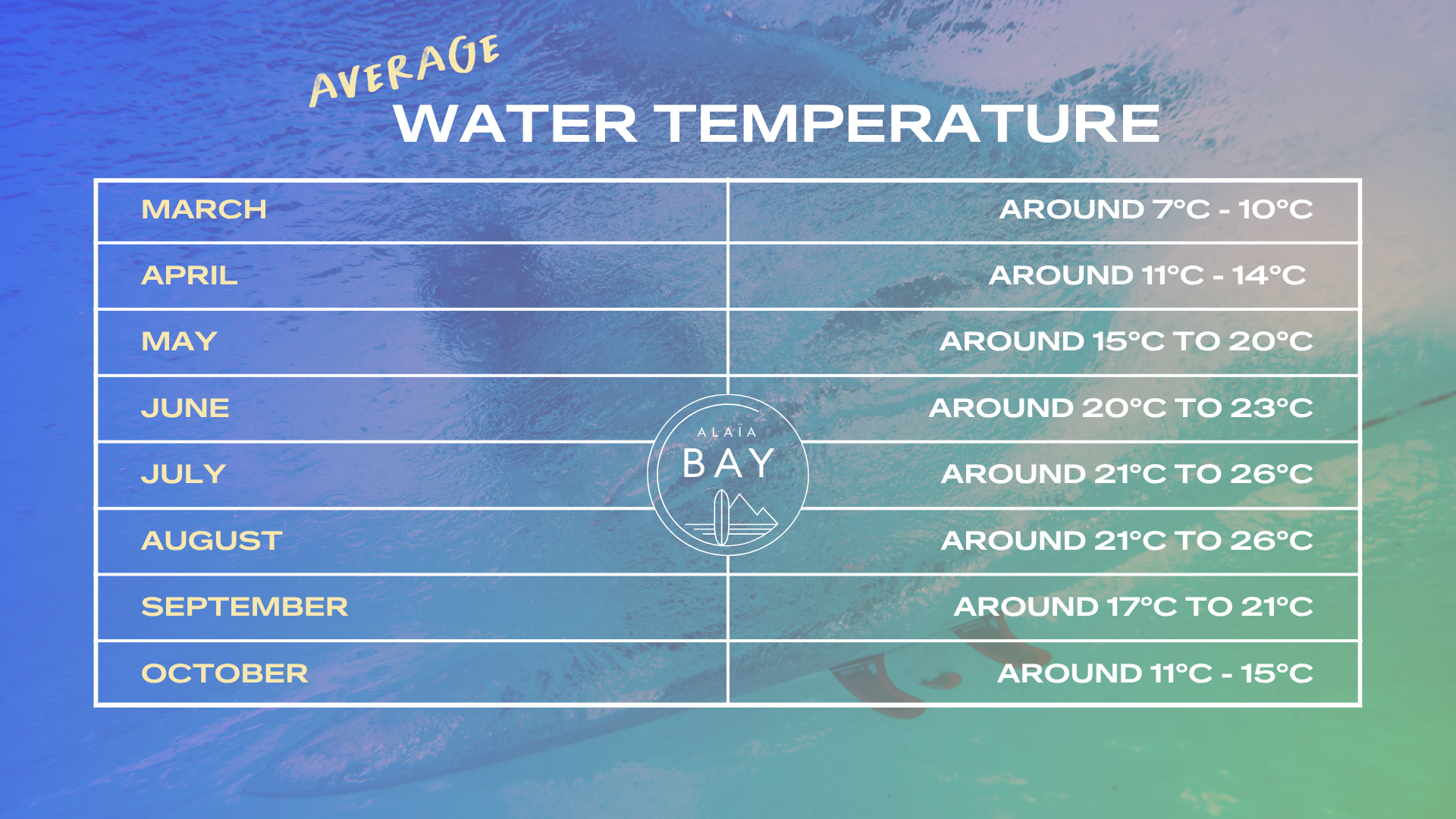
Average Water Temperature throughout the year
These temperatures are a general guide based on the time of year.
Alaïa Bay is closed during November, December, January and February.
The ranges become wider from May onwards because weather conditions can have a significant impact.
May is probably the best example. The water might sit closer to 15°C during a cooler period, but Valais can also get short heatwaves in spring. A few consecutive warm days can push the temperature up surprisingly quickly.
By July and August, warm conditions become much more consistent. This is when you can regularly expect water in the low to mid twenties, with plenty of sessions surfed in boardshorts or bikinis.
September usually starts warmer and gradually cools down as autumn arrives.
Why Does the Water Temperature Change?
Alaïa Bay is outdoors, so the water responds naturally to the weather around it.
Sunshine, air temperature and consecutive warm or cold days all influence how the water feels. That means two sessions in the same month can sometimes have noticeably different conditions.
Spring is particularly variable. You might arrive in April expecting cold Alpine conditions and end up surfing on a sunny afternoon with much warmer air than expected. You can also get the opposite, with snow still sitting on the mountains around the Bay.
Summer tends to be more stable. Long sunny days and warmer nights help the water maintain a much more comfortable temperature across July and August.
Air Temperature and Water Temperature Are Different
One thing to keep in mind when checking the weather before your session is that the air temperature does not always tell you how the water will feel.
This is especially true at the beginning of the season.
You can have a beautiful sunny day in March or April where it feels comfortable outside, while the water is still around 9°C or 12°C.
The reverse can also happen later in the year. After several warm days, the water can stay comfortable even if the air temperature drops slightly.
That contrast is part of the experience of surfing in the Alps.
There are days early in the season when you can paddle out with snow on the surrounding peaks. Sometimes you might even catch snowfall during your session.
A few months later, the same lineup can feel completely different, with warm water, sunshine and people surfing without wetsuits.
What Wetsuit Do You Need at Alaïa Bay?
The right wetsuit depends on the water temperature, the weather and how sensitive you are to the cold, but these guidelines can give you a good idea of what to expect.
When the water is around 7°C to 12°C, a 5/3 mm or 5/4 mm wetsuit is usually the best option. Boots and gloves can also make a big difference and are recommended, especially during the colder sessions in March, April, October and November.
Once the water reaches around 15°C to 20°C, a 4/3 mm or even a 3/2 mm wetsuit will generally be enough for most surfers. This is often the case through May and during parts of September.
When temperatures move into the low twenties, you can start going lighter. A 2/2 mm shorty can work well depending on the conditions and your own preference.
By July and August, when the water can reach between 21°C and 26°C, plenty of surfers choose to surf without a wetsuit at all. Boardshorts and bikinis are common during the warmest periods.
Of course, everyone experiences temperature differently. Some surfers will happily paddle out in boardshorts while others prefer a thin layer of neoprene even in summer.
What Should Beginners Know?
If you are trying surfing for the first time, seeing 9°C or 12°C on a temperature chart might sound slightly intimidating.
The right wetsuit changes the experience completely.
With the right thickness and accessories, colder water becomes much easier to manage, especially because you will spend your session moving, paddling and catching waves.
For beginners, comfort is particularly important. There is already plenty to focus on during your session, from learning your position on the board to paddling, standing up and listening to your coach.
Wearing equipment suited to the conditions means you can focus on your surfing rather than getting cold halfway through the session.
You do not need to know exactly which wetsuit to choose before you arrive. Every coached session includes a wetsuit, and our team will help you find the right option for the conditions that day.
Can You Rent Wetsuits and Cold Water Gear at Alaïa Bay?
Yes. Our rental has everything you need to surf comfortably throughout the season.
For coached sessions, a wetsuit is already included but for guided and free surf sessions you can rent 2/2 mm shorties, 3/2 mm, 4/3 mm and 5/4mm wetsuits, as well as boots, hood and gloves for colder conditions.
This means you do not need to travel with different wetsuits for different temperatures or worry about whether the one you own will be warm enough.
If you are visiting for the first time, travelling through Switzerland or simply prefer to leave your surf gear at home, you can arrive at Alaïa Bay and choose the equipment that best suits the conditions.
Our team can also guide you if you are unsure which thickness to take.
When Is the Warmest Time to Surf Alaïa Bay?
If warm water is your priority, July and August are the most reliable months.
Water temperatures usually sit between approximately 21°C and 26°C, with consistently warm weather across Valais.
June can also be very comfortable, particularly towards the second half of the month, while early September often holds onto some of the summer warmth.
That said, warmer days can appear much earlier than people expect.
May can occasionally feel like summer during a heatwave, and some of those unexpected warm spring sessions can be among the nicest days of the season.
Surfing Alaïa Bay Through the Seasons
We dare to say Alaïa Bay has one of the most beautiful settings of any wave pool.
Those photos of surfers on a wave with the snowy Alps in the background? They are very real. Depending on the year, you can still catch that view well into spring and sometimes until the beginning of June.
Then the landscape starts to change. The snow gradually disappears from the lower peaks, the days get longer and the Bay moves into full summer mode.
Both have their own character. Surfing with snow covered mountains behind you is pretty special, but so is paddling out on a hot summer day with the Alps surrounding the lineup.
Whatever time of the season you visit, the view is part of the session.